
AS400 Software – Everything You Need to Know for Modern Enterprises in 2026
AS400 software, also known as IBM i, is a trusted enterprise platform for mission-critical applications. Since its launch in 1988, it has been widely used in banks, hospitals, manufacturing units, and government agencies. Its combination of scalability, reliability, and security keeps it relevant for modern enterprises. This guide explores AS400’s history, architecture, benefits, challenges, modernization strategies, and future trends, showing why IBM i remains an ideal choice for critical workloads.
AS400 software provides secure scalable and reliable enterprise solutions, supporting legacy and modern applications for mission-critical business operations.
What is AS400 Software?

History of AS400
IBM introduced AS400 in 1988 as an integrated system, including hardware, the OS/400 operating system, and a built-in relational database. It provided businesses with a complete enterprise computing solution. Over time, AS400 evolved into IBM i on Power Systems. Its upward compatibility allows older programs to run seamlessly on modern hardware. Many organizations still refer to it as AS400 due to familiarity and historical usage.
Modern AS400 (IBM i)
Today, IBM i runs on modern Power Systems servers, offering high performance and advanced memory handling. Modern IBM i supports mission-critical workloads like ERP, banking, healthcare, and logistics. Continuous updates, modern tools, and flexible API integration make it a modern, enterprise-ready platform.
AS400 Software Architecture
Hardware Components
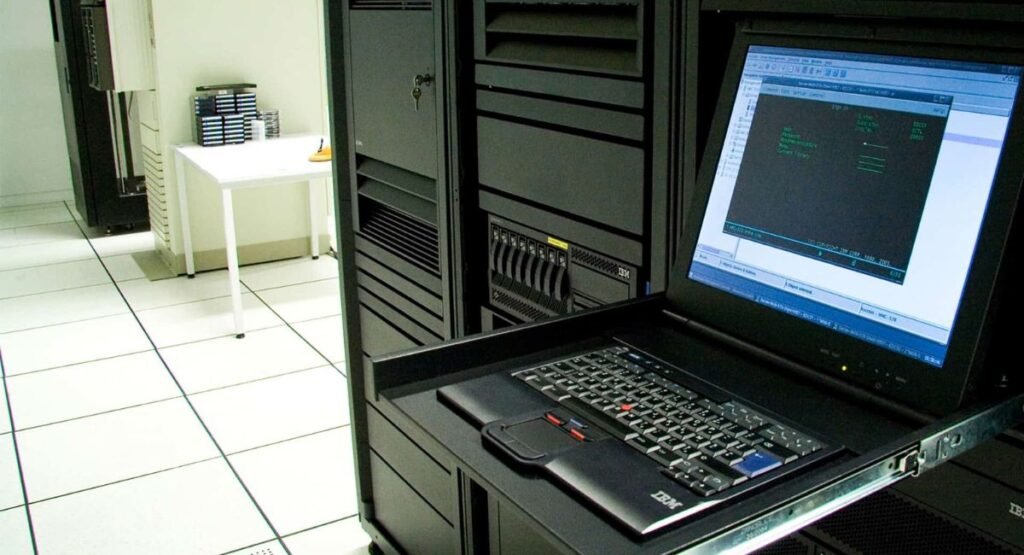
IBM Power Systems form the backbone of AS400. These servers are modular and easily scalable. Storage and peripheral devices are optimized for enterprise workloads. Redundancy and failover features ensure system reliability, minimizing downtime for high-availability applications.
Operating System
IBM i (formerly OS/400) provides stability and security. It supports both legacy applications and modern development tools. The OS is designed for high availability, failover, and automated monitoring, allowing enterprise workloads to run smoothly 24/7.
Database Architecture
AS400’s built-in DB2 database delivers high reliability and performance. It efficiently handles complex queries and transactions, making it ideal for banking, healthcare, and manufacturing sectors. Integrated database architecture maintains data consistency, transactional integrity, and supports high-volume processing.
Key Features of AS400 Software
Scalability
AS400’s scalable architecture allows expansion from 4-core to 256-core servers. Businesses can grow without frequent hardware replacements. Flexible resource allocation ensures cost-effective expansion, making it suitable for both short-term and long-term growth.
Security
IBM i offers advanced security features, including access control, authentication, encryption, and audit logging. It meets HIPAA, PCI, and GDPR compliance standards, protecting sensitive enterprise data from misconfigurations and breaches.
Reliability
AS400 is known for 24/7 uptime. Mission-critical workloads run uninterrupted, with high-availability tools minimizing downtime. System redundancy and failover features ensure continuous operations even during emergencies.
Modern Development
IBM i supports multiple programming languages, including RPG, SQL, Java, PHP, .NET, and C++. Open-source tool integration allows developers to build modern applications and APIs. The platform is cloud-ready and analytics-ready, ensuring a future-proof enterprise IT strategy.
Compatibility
AS400’s upward compatibility lets legacy applications run seamlessly, saving time and costs. Enterprises can protect their existing IT investments and transition to modern solutions smoothly.
Industries Using AS400 Software
AS400 serves multiple industries:
- Banking: Core banking systems and secure transaction processing.
- Healthcare: Patient records, compliance, and workflow automation.
- Manufacturing: ERP, supply chain, and inventory management.
- Retail: POS systems, logistics, and inventory tracking.
- Government: Critical services and secure data processing.
Benefits of Using AS400 Software
AS400 provides businesses with:
- Cost-effectiveness and high reliability
- Strong security for enterprise data
- Support for legacy and modern applications
- Enterprise-grade scalability and cloud-readiness
- Protection of IT investments through upward compatibility
- Continuous updates for modern and competitive infrastructure
Challenges of AS400 Software
Despite its advantages, AS400 has some challenges:
- Perception of being outdated due to its 1988 origins
- Talent gap as experienced IBM i experts retire
- Complexity in migrating legacy applications
- Limited availability of skilled personnel
- Maintenance and operational cost considerations
Modernization & Cloud Integration

Cloud Deployment Options
IBM i supports public, private, and hybrid cloud deployments. Cloud migration enables scalability, disaster recovery, and reduced infrastructure costs, modernizing enterprise IT operations efficiently.
AI and Analytics Integration
IBM i integrates with AI and analytics tools, enabling predictive analytics and real-time business intelligence. This enhances operational efficiency and accelerates data-driven decision-making.
API Connectivity
IBM i integrates with modern APIs to automate workflows and allow seamless data exchange between legacy and modern systems, essential for hybrid IT environments.
AS400 Performance Optimization
System Tuning & Load Balancing
Performance tuning and load balancing in Power Systems ensure workloads are evenly distributed, latency is minimized, and resources are fully optimized.
Database Indexing & Query Optimization
DB2 database indexing and query optimization improve transaction speed and reporting efficiency, essential for high-volume data processing.
Resource Management & Job Scheduling
IBM i’s resource management and job scheduling optimize CPU, memory, and I/O usage, ensuring batch processing and critical tasks run smoothly.
Migrating Legacy AS400 Applications
Challenges in Migration
Integrating legacy applications with modern systems can be complex, with risks of downtime and operational disruption, requiring skilled developers.
Tools and Strategies for Migration
Modernization tools and step-by-step migration strategies minimize downtime. Testing and validation frameworks ensure a smooth transition, and incremental migration reduces risk and cost.
Best Practices for Minimal Disruption
- Document existing workflows
- Perform incremental migration
- Provide staff training
- Conduct testing and knowledge transfer
Cost Considerations for AS400 Software
Initial Hardware & Software Costs
IBM i licenses and Power Systems servers require initial investment. Hardware configuration depends on workload requirements.
Maintenance and Support Costs
Regular updates, patches, and monitoring contribute to ongoing costs. Support contracts ensure issue resolution and system uptime.
Cost Savings Through Modernization
Cloud integration, automation, API connectivity, and analytics adoption reduce operational costs and improve efficiency, generating long-term ROI.
Talent Management for AS400
Training Programs for New Developers
Training in RPG, SQL, and IBM i tools equips new staff, ensuring continuity and retention of legacy knowledge.
Knowledge Transfer from Retiring Experts
Documentation and mentorship programs prevent knowledge loss and enable smooth workflow transitions.
Building a Sustainable AS400 Team
Continuous skill development and hybrid expertise in legacy and modern IT maintain team resilience and efficiency.
Case Studies of AS400 Success
Banking Industry
Core banking and secure transactions run on IBM i, delivering high uptime and reliable processing.
Healthcare & Hospital Systems
Patient records, compliance, and real-time access are streamlined. Workflow automation improves security and efficiency.
Manufacturing ERP
Supply chain management and inventory tracking are more efficient with IBM i, leading to cost savings and productivity improvements.
Common Myths About AS400 Software
- “AS400 is obsolete” – Reality: IBM i continues to evolve with updates and modernization.
- “It can’t integrate with modern systems” – Reality: APIs, cloud, and middleware enable seamless integration.
- “Only legacy apps run on AS400” – Reality: Modern applications and analytics tools run on IBM i.
Top Tools & Utilities for AS400
- IBM Navigator for i: Centralized administration and performance monitoring.
- Rational Developer for i (RDi): Modern IDE for streamlined development and testing.
- Backup, Monitoring, and Security Tools: Reduce downtime and maintain compliance.
Community & Resources for AS400 Users
- IBM i User Groups: Networking and sharing best practices.
- Online Forums & Communities: Peer support and technical guidance.
- Annual Surveys & Research Reports: Track trends and modernization strategies.
Future of AS400 Software
Continuous investment in IBM i and Power Systems ensures enterprises remain future-ready. Cloud, AI, and analytics integration provide a competitive edge. Scalability, reliability, and modernization ensure AS400 remains relevant for decades.
FAQ
1.Is AS400 still used today?
Yes, AS400, now called IBM i, is still widely used in banking, healthcare, manufacturing, and government for mission-critical workloads due to its reliability, scalability, and security.
2.Is AS400 the same as SAP?
No, AS400 (IBM i) is an enterprise server platform, while SAP is enterprise software for ERP and business processes. SAP can run on AS400 servers in some cases.
3.Is AS400 a CRM system?
No, AS400 is not a CRM system. It’s a server platform that can host enterprise applications, including CRM software, ERP, and custom business applications.
4.What operating system runs on AS400?
AS400 runs IBM i (formerly OS/400), a secure, stable operating system designed for enterprise workloads, supporting legacy applications and modern development tools simultaneously.
5.What replaced the AS400?
AS400 evolved into IBM i on Power Systems. While the hardware and OS were modernized, its upward compatibility preserves legacy applications, making IBM i the natural replacement.
Conclusion
AS400, now IBM i, remains a reliable, secure, and scalable enterprise platform. With modern Power Systems, cloud integration, AI, and API support, it continues to run mission-critical workloads efficiently. Enterprises can protect legacy investments while modernizing operations, ensuring long-term relevance, high performance, and competitive advantage in banking, healthcare, manufacturing, and other industries.